Concrete Futures

Technology and Decolonization in Modern Morocco

Concrete Futures

Technology and Decolonization in Modern Morocco

Struggles over critical urban technologies during and after Morocco’s French Protectorate reveal a fundamental conflict over the nature of decolonization in the country.

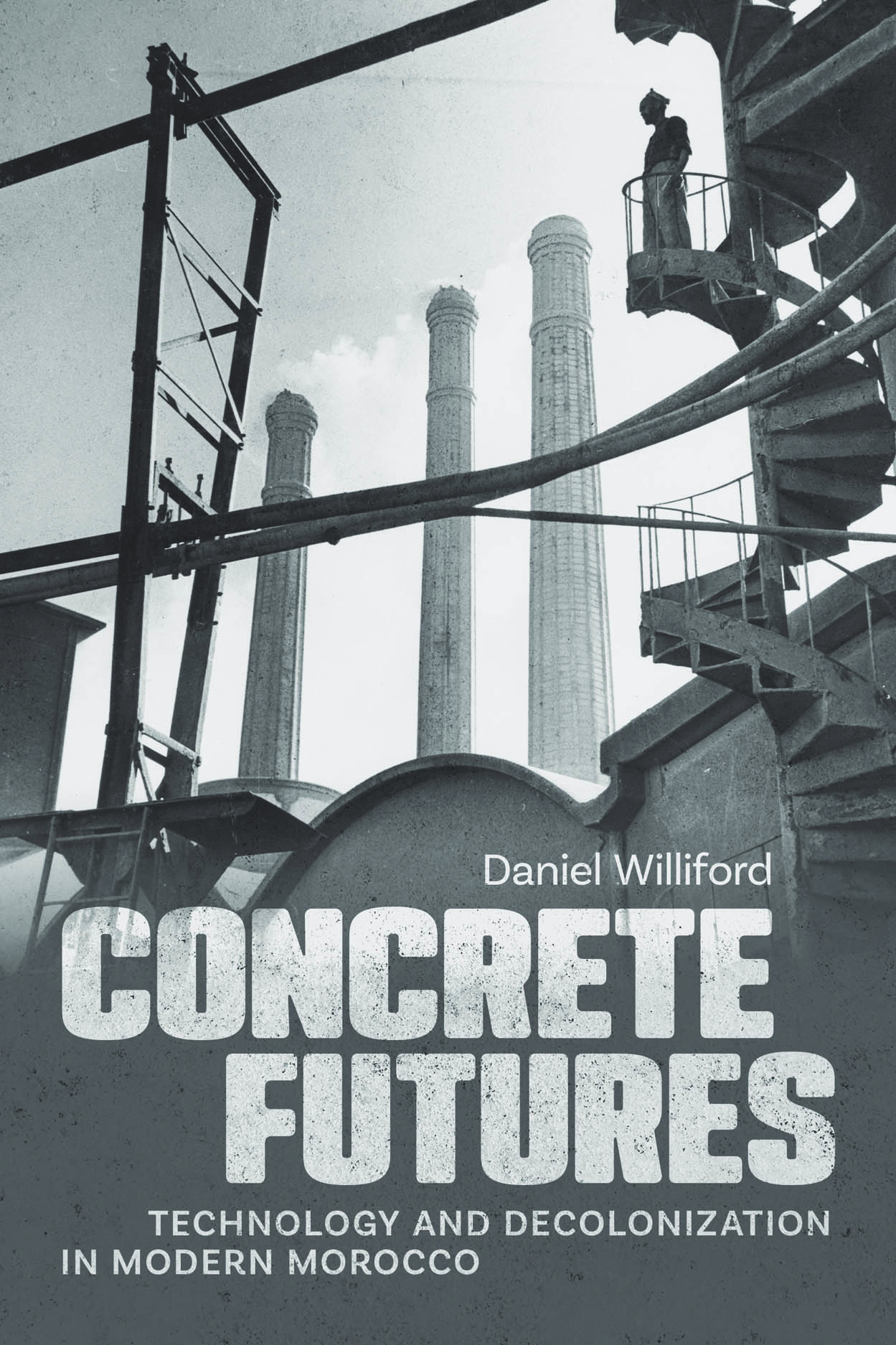
Concrete Futures is a history of concrete that complicates our view of the building material, revealing it as a site of contestation over resources and authority in twentieth-century Morocco. Beginning with the French protectorate period between 1912 and 1956 and continuing into the post-independence era, Daniel Williford uses debates surrounding concrete building technologies as a conduit through which to explore struggles over colonization, modernization, and decolonization. The half-finished cinder block buildings found in cities all over Morocco, he shows, are a product of the system that colonial engineers and officials developed to deal with labor disputes, contests over knowledge, and anticolonial unrest.

By exploring concrete and its uses, Williford discloses how conflicts between experts, workers, and residents over construction and urban renewal—from the introduction of reinforced concrete to strategies of slum clearance—shaped the meaning and the trajectory of decolonization in Morocco.


304 pages | 21 halftones | 6 x 9 | © 2026

History: Environmental History, History of Technology

Middle Eastern Studies

Reviews

Concrete Futures examines a single technology, concrete, and traces its history, uses, and adaptations from the colonial period to the post-independence period in Morocco. Williford convincingly shows how this pervasive material that dominates the urban landscape created new forms of division and difference, privileged certain knowledge and expertise, and ultimately limited political possibilities. This work will be invaluable reading for scholars of Africa, the Middle East, empire, decolonization, environmental history, and science and technology studies.”

Jennifer Johnson, author of “The Battle for Algeria: Sovereignty, Health Care, and Humanitarianism”

“Williford’s engrossing exploration of the ‘politics of matter’ in colonial and postcolonial Morocco uses materials, materiality, and a complex story of technological change to offer fresh insights into the relationship between infrastructural technology and power in the twentieth century. Going well beyond interpretations of concrete as a signifier of modernity, he vividly demonstrates how concrete shaped and was shaped by broad struggles over justice, morality, and equality in colonial and postcolonial Moroccan society. Williford emphasizes not concrete’s solidity, but its indeterminacy, as it was drawn into divergent and often conflicting calculi for claiming power during a period of intense sociotechnical change. Williford skillfully demonstrates throughout the book the deeper significance of seemingly simple infrastructural technologies and how they facilitated or foreclosed different modes of colonial, anticolonial, and decolonial action. Highly recommended.”

Suzanne Moon, author of “Technology in Southeast Asian History”

Table of Contents

Note on Transliteration and Translation

List of Abbreviations

Introduction

Chapter 1. Concrete and Crisis in the Early Protectorate

Chapter 2. Matters of Piety and the Politics of Matter During the Interwar Years

Chapter 3. Fast and Slow Violence in the Postwar Period

Chapter 4. Labor and Debt in the Era of Decolonization

Chapter 5. Disaster and Experimentation After Independence

Chapter 6. Development and Desire Through the Years of Lead and Neoliberalism

Conclusion

Acknowledgments

Notes

Bibliography

Index

Be the first to know

Get the latest updates on new releases, special offers, and media highlights when you subscribe to our email lists!

Sign up here for updates about the Press