
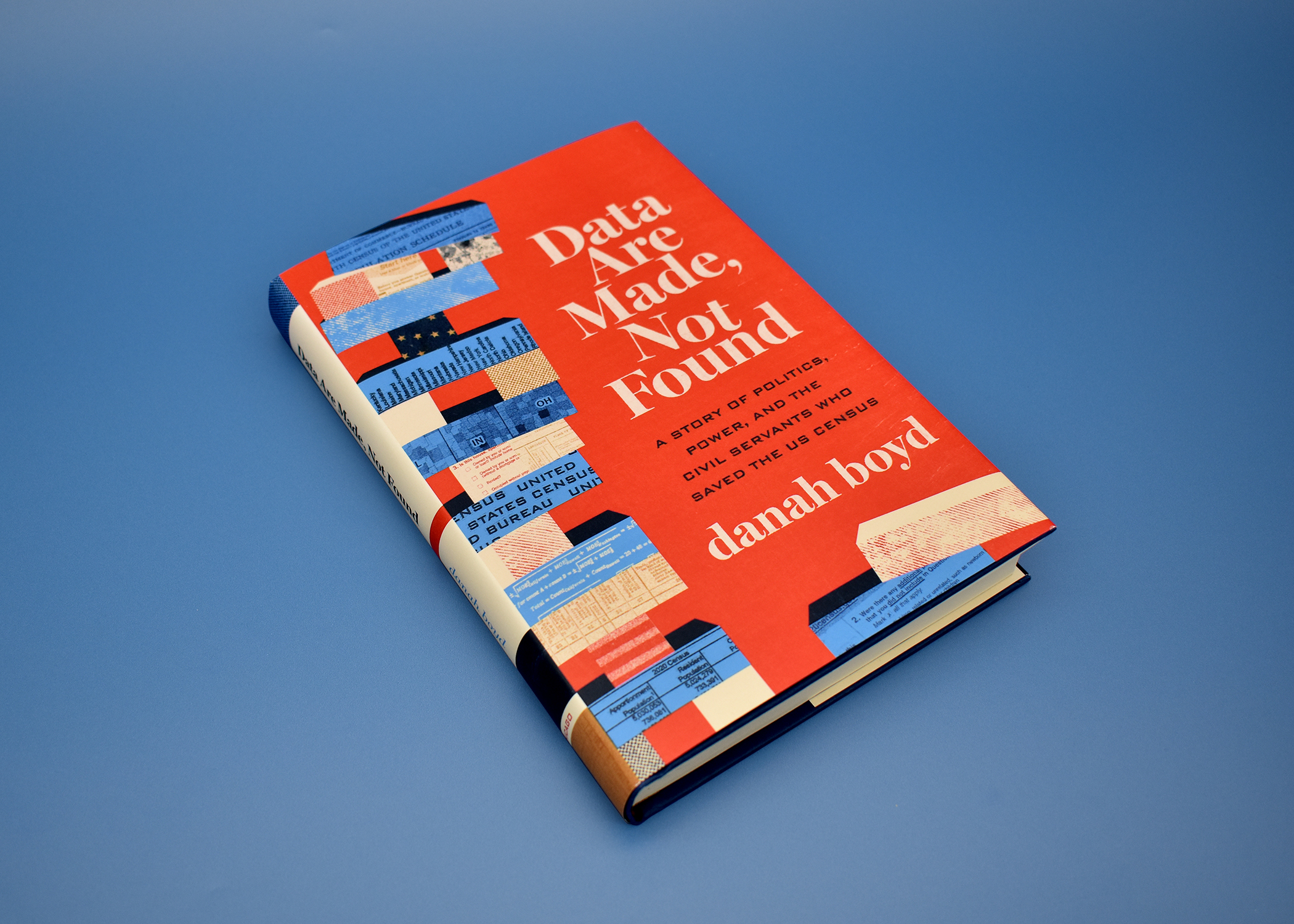
Data Are Made, Not Found
A Story of Politics, Power, and the Civil Servants Who Saved the US Census
Data Are Made, Not Found
A Story of Politics, Power, and the Civil Servants Who Saved the US Census
An eye-opening story of the people who make the census, the United States’ largest and most consequential dataset, and the growing threats to their crucial work.
By many measures, the US census is the government’s largest non-wartime operation, and one of the world’s oldest and biggest data-making endeavors. The 2020 census required more than a decade of planning and technical work—not to mention managing nearly a quarter of a million temporary workers simultaneously—to collect data about the American public. That data was then processed to count each of 331,449,281 residents once—and only once—and in the right place. The operation is also one of the country’s most consequential. Census data determine how political power and federal funding are allocated. Census data make politics, and consequently, politics make census data. In this urgent book, danah boyd explores what it took for the Census Bureau to make the 2020 census, amidst a global pandemic and natural disasters, and while navigating political forces that constrained the budget, micro-managed the schedule, and attacked statisticians’ methods.
With rare insider access to the Census Bureau, boyd observed and interviewed hundreds of government civil servants who made the 2020 census. By documenting the perspectives of government workers, Data Are Made, Not Found provides a rare glimpse into what it takes to make democracy’s data. Each chapter reveals a different challenge—ranging from the last-minute fights about a citizenship question to the not-so-helpful help of well-intended stakeholders to avoid undercounts—and shows how civil servants responded to each problem, controversy, and hurdle. Boyd shows how many of the challenges that the Census Bureau faced in 2020 resulted from decades of political operatives, data users, and various stakeholders playing what boyd calls “Jenga politics,” weakening the administrative state for short-term political gains by removing support and adding more requirements.
Civil servants saved the 2020 census, but future censuses—and other data-making efforts related to elections, health, and the economy—are precarious. Boyd’s message is clear and compelling: protecting democracy means protecting the people and institutions that produce this data.
400 pages | 1 halftones, 1 line drawings | 6 x 9 | © 2026
History: American History
Political Science: American Government and Politics
Reviews

Table of Contents
Preface
1. Data Make Politics, Politics Make Data
2. Politicizing Who Counts
3. Modernizing Data Collection
4. An Out-of-Control Schedule
5. The Case of the Missing College Students
6. When Help Is Not Helpful
7. How to Anger Everyone
8. Documenting the Undocumented
9. When the Numbers Are Asked to Speak
10. Resilience in an Era of Jenga Politics
Acknowledgements
Notes
Index

Awards
J. Anthony Lukas Prize Project: J. Anthony Lukas Prize for Work-in-Progress
Won
Author Events
danah boyd will read from and discuss Data Are Made, Not Found as part of the Magic Mountain Talks series
danah boyd will read from and discuss Data Are Made, Not Found as part of the Magic Mountain Talks series. For more information, visit the Magic Mountain site.
Magic Mountain Talks
Trident Booksellers Cafe
940 Pearl Street
Boulder, Colorado