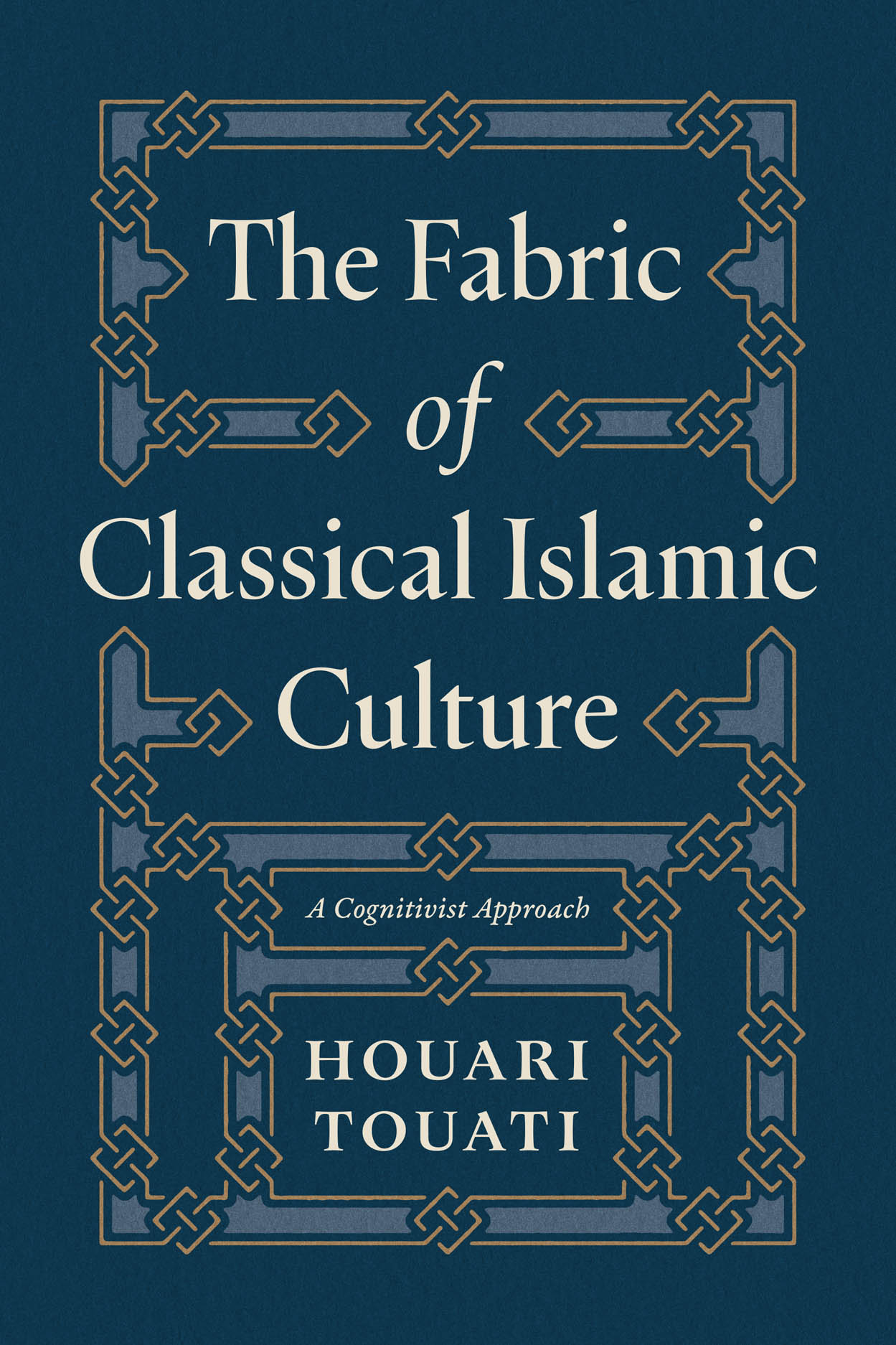
The Fabric of Classical Islamic Culture
A Cognitivist Approach
The Fabric of Classical Islamic Culture
A Cognitivist Approach
A sweeping account of the evolution of early Islamic culture.
This book argues that early Islamic literature was influenced less by the Qur’an and more by the bureaucratic culture of the Diwan, the secular political system in place long before a written religious culture emerged. As Houari Touati explains, this secular Arab culture quickly outstripped written religious erudition: first, because of the diverse communities who participated in the scholarly networks of the empire; and second, because of the universalizing influence of the period’s Greco-Arabic translation movement. This process of cross-cultural fertilization, Touati recounts, flourished within Islam until the canonization of the Hadith (the official sayings, actions, and sanctions of Muhammad) began to disrupt this dynamic of interchange after the tenth century, without, however, managing to put a definitive end to it. The Fabric of Classical Islamic Culture is a wide-ranging, comparative account of the parallel development of secular and sacred culture that produced the modern Arabic world.
Reviews

Table of Contents
Introduction
Chapter One: Writing and Culture in the Late Antique Hijaz
Chapter Two: Birth of a School Education
Chapter Three: When the Qur’an Became a Book
Chapter Four: The Triumph of the Written Word in Religious Tradition
Chapter Five: An Arabic Grammatology
Chapter Six: From Graphical Inscription to Literature
Chapter Seven: Arab Plato and the Giants
Epilogue
Acknowledgments
Abbreviations
Notes
Index