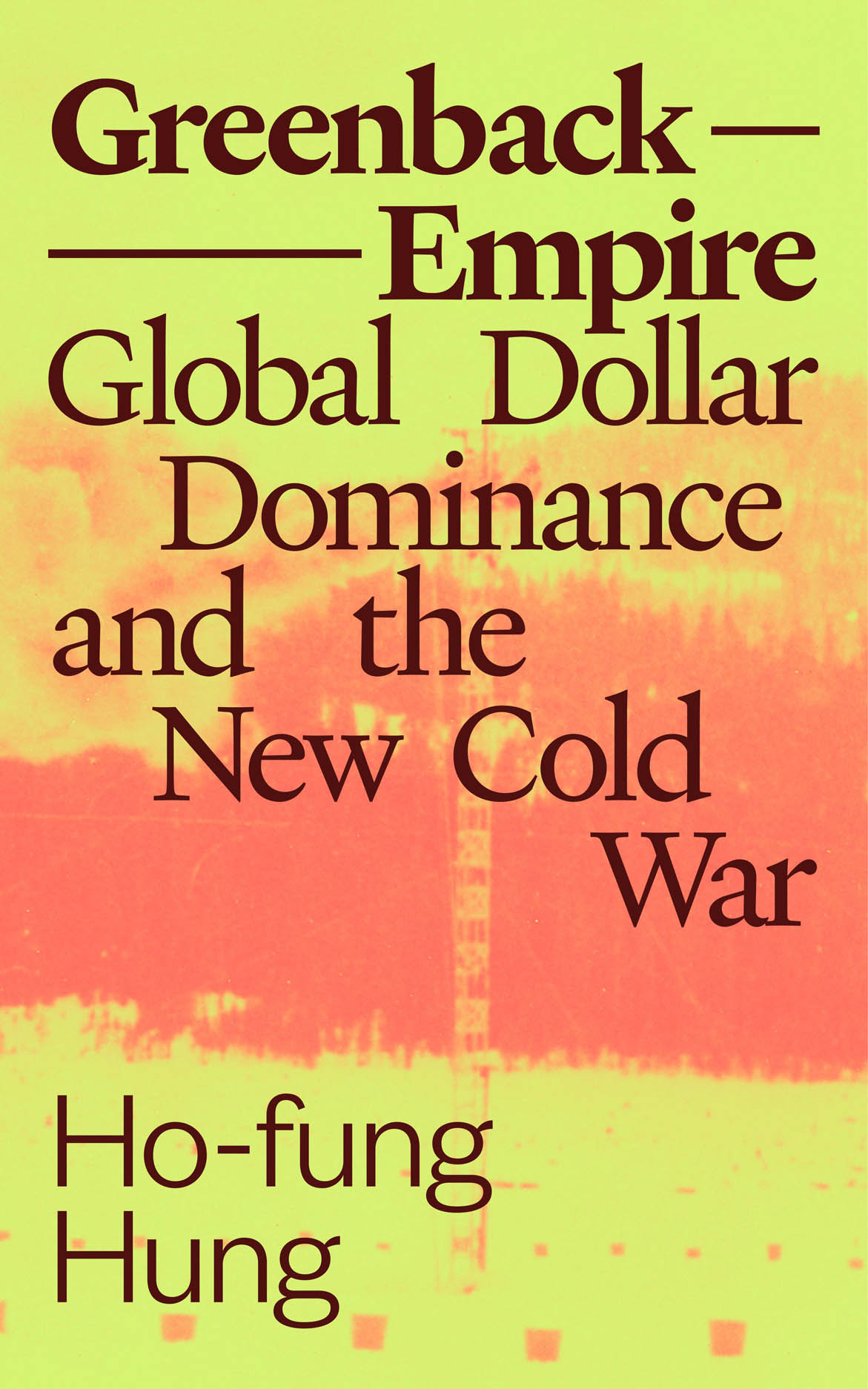
Greenback Empire
Global Dollar Dominance and the New Cold War
Greenback Empire
Global Dollar Dominance and the New Cold War
A critical history of the US dollar’s dominance in the world economy—and what has kept China’s currency from overtaking it.
The dollar is the primary currency of the world economy. With China now rivaling the United States on the world stage, a critical question hangs in the balance: will the Chinese renminbi challenge the status of the dollar and, in doing so, deprive America of its “exorbitant privilege”?
In GreenbackEmpire, Ho-fung Hung offers a powerful account of why, even as American shares of global production, ownership, and trade continue to decline, its currency has retained the support of governments and investors around the world. For six decades, Hung shows, the dominance of the dollar has rested on the security umbrella that the US offers to the world’s wealthiest countries—including oil producers. To these countries, support for the value of the dollar is tantamount to maintaining US protection. While China has become a serious geopolitical and economic rival to the US, the Chinese state’s airtight control of its financial system has delayed the free trading of the renminbi, limiting the currency’s internationalization. In short, the same strategy that engineered growth in China’s economy is restraining its currency’s rise in opposition to the dollar. Hung’s Greenback Empire is an essential history of the dollar’s prowess, indispensable for understanding the future of the global monetary system.
296 pages | 24 halftones, 9 line drawings, 8 tables | 5 1/2 x 8 1/2 | © 2026
Economics and Business: Economics--International and Comparative, Economics--Money and Banking
Political Science: Diplomacy, Foreign Policy, and International Relations
Sociology: Social Change, Social Movements, Political Sociology
Reviews

Table of Contents
Preface
1. Introduction: The Enigmatic Longevity of the Dollar Standard
The Inadequacy of Conventional Economic Explanations
The State Theory of World Money
Existing Political Explanations of Dollar Hegemony
An Overview
2. Money and Historical Capitalism: From Silver to Gold
American Silver and the Price Revolution: East and West
Money, Interstate Competition, and Capitalism in Europe
Money, the Imperial State, and the Market Without Capitalism in China
World Hegemony and World Money
Part I. The Military Foundation of Dollar Hegemony
3. The Dollar Standard: From Gold to Fiat
The Rise of the Dollar-Gold Standard, 1913–56
The Tyranny and End of the Gold Standard, 1879–1971
The Fiat Dollar Standard After 1971: Declared Dead but Never Died
4. The Cold War Dollar-Security Nexus
Is the USD a “Negotiated Currency” After Bretton Woods?
Bretton Woods’s Foundation: Guns Instead of Gold
Rise of the Petrodollar
5. The Currency of American Power After the Cold War
Post–Cold War Challenges to the Dollar: Europe, Iraq, and Japan
The Dollar’s Grip Through Technology and Crises
Measuring the Dollar-Security Nexus and Its Erosion
Part II. Contradictions of Dollar Hegemony
6. US Domestic Politics vs. USD Global Supply
US Economic Crisis and the End of Bretton Woods
The Inflation vs. Unemployment Dilemma in Economic Theories
Monetary Politics as Class War
Inter-Capitalist Conflict and Monetary Policy Swings
7. The Dollar Peril to Global Development
The Global Development Cycle
The Dollar Cycle as Developmental Context
Discontents from the Developing World
Part III. China and the Future of Dollar Hegemony
8. China’s Rise in the Dollar System
The Genesis of the China Boom
“Chimerica”
China as a Capital Exporter
9. The China Challenge That Never Is
Financial Closure and RMB Inconvertibility
The Struggle to Internationalize the RMB
The Challenge of Capital Flight
A Chinese-Russian De-Dollarization Alliance?
10. Conclusion: Conflicting Tendencies and Future Scenarios
The Military Foundation of World Money: From Bullion to Fiat Currency
Dollar Weaponization, Trump II, and Plausible Futures
Acknowledgments
Notes
Data Sources and References
Index