Leo Strauss on Hobbes
Leo Strauss on Hobbes
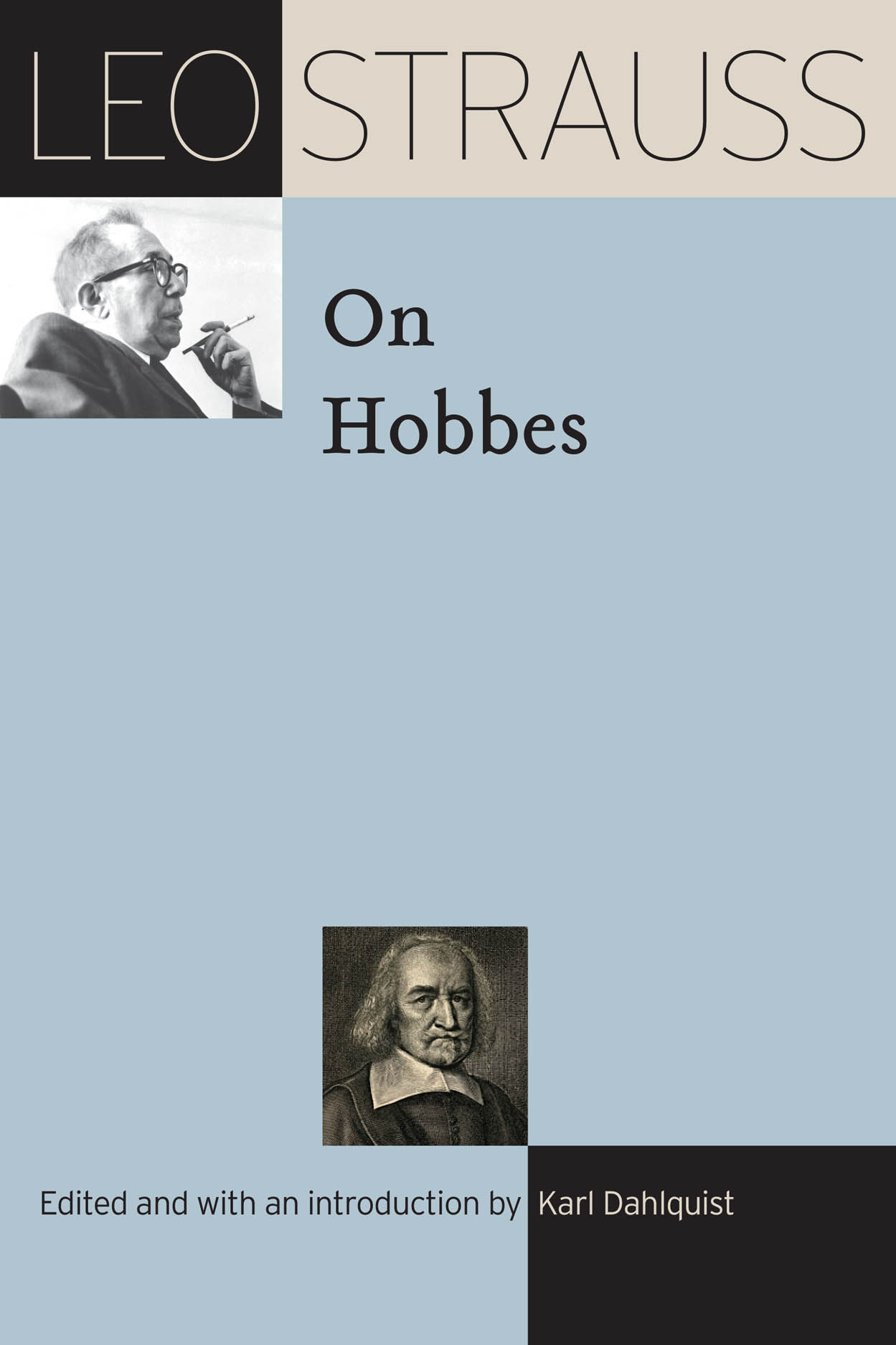
Leo Strauss’s final seminar on Thomas Hobbes, representing the culmination of more than four decades of close engagement.
Leo Strauss spent more than four decades studying the work of Thomas Hobbes. In Strauss’s distinctive genealogy of political thought, Hobbes emerges as a decisive counterpoint, not only to the Ancients, but also to Strauss’s own project. Strauss saw Hobbes as both the founder of modern natural rights and the modern esoteric writer par excellence.
Strauss’s final seminar on Hobbes from 1964 is the culmination of his engagement with Hobbes’s corpus and contains the richest account of Strauss’s final insight into the nerve of Hobbes’s thought, linking human consciousness to power and passion. The seminar reflects on the tension between Hobbes’s scientific and political frameworks, Hobbes’s emphasis on rights over duties, Hobbes’s atheism, and Hobbes’s attention to causal thinking as the core capacity that sets humans apart from other animals. It also includes Strauss’s most sustained exchange with the Marxist political theorist, C. B. Macpherson. Their rival interpretations of why the state of nature takes the form of a war of all against all led Strauss to reconsider his earlier writings on Hobbes, including those parts that pertain to other thinkers, such as Aristotle, Locke, and Spinoza.
With an introductory essay by Karl Dahlquist that traces the evolution of Strauss’s thinking on Hobbes and frames Strauss’s dialogue with Macpherson, this 1964 seminar on Hobbes is a vital contribution to political thought and intellectual history.
512 pages | 6 x 9
The Leo Strauss Transcript Series
Philosophy: Political Philosophy
Political Science: Classic Political Thought

Table of Contents
Note on the Leo Strauss Transcript Project
Editorial Headnote
Editor’s Introduction
1: Introduction: What Is Hobbes After?
2: The State of Nature: Hobbes and Macpherson (Leviathan, Chapter 13; Possessive Individualism, Chapters 1, 2.1–2, 6)
3: Modern Philosophy and Natural Right (De Cive, Epistle Dedicatory and Preface)
4: Man’s Natural Nonsociality: Thoughts and Passions, Power, Vanity (Leviathan, Introduction, Chapters 1–3)
5: Properties, Names, and Passions (Leviathan, Chapters 4–6)
6: Cognition and Knowledge, the Possibility of Living in Peace (Leviathan, Chapters 8–12)
7: The Origin of Justice and the Laws of Nature (Leviathan, Chapters 14–15; De Cive, Chapter 3; Possessive Individualism, Chapter 2.3)
8: The Center of Hobbes’s Teaching: Natural Equality (Leviathan; De Cive, Chapter 1)
9: Is Man a Social Animal? Creation of the Commonwealth (Leviathan, Chapters 17–18; De Cive, Chapters 5–6)
10: Sovereign Power; Macpherson on Social Obligation (Leviathan, Chapters 19–20, 29; De Cive, Chapters 8, 9; Possessive Individualism, Chapter 2.5)
11: Natural Liberty and the Liberty of the Subject; the Classical Tradition in Politics; Macpherson’s Critique of Hobbes’s Model (Leviathan, Chapters 21–24; Possessive Individualism, Chapter 2.5)
12: Things That Tend to the Dissolution of the Commonwealth (Leviathan, Chapter 29; De Cive, Chapter 12)
13: The Duties of the Sovereign (Leviathan, Chapters 30–31; De Cive, Chapter 13)
14: Law and Counsel; Civil Law (Leviathan, Chapters 25–26; De Cive, Chapter 14)
15: Macpherson on the Levellers and Harrington (Possessive Individualism, Chapters 3–4)
16: Macpherson on Liberal Democracy and Locke’s View of Property (Possessive Individualism, Chapter 5, Appendix)
Acknowledgments
Notes
Index