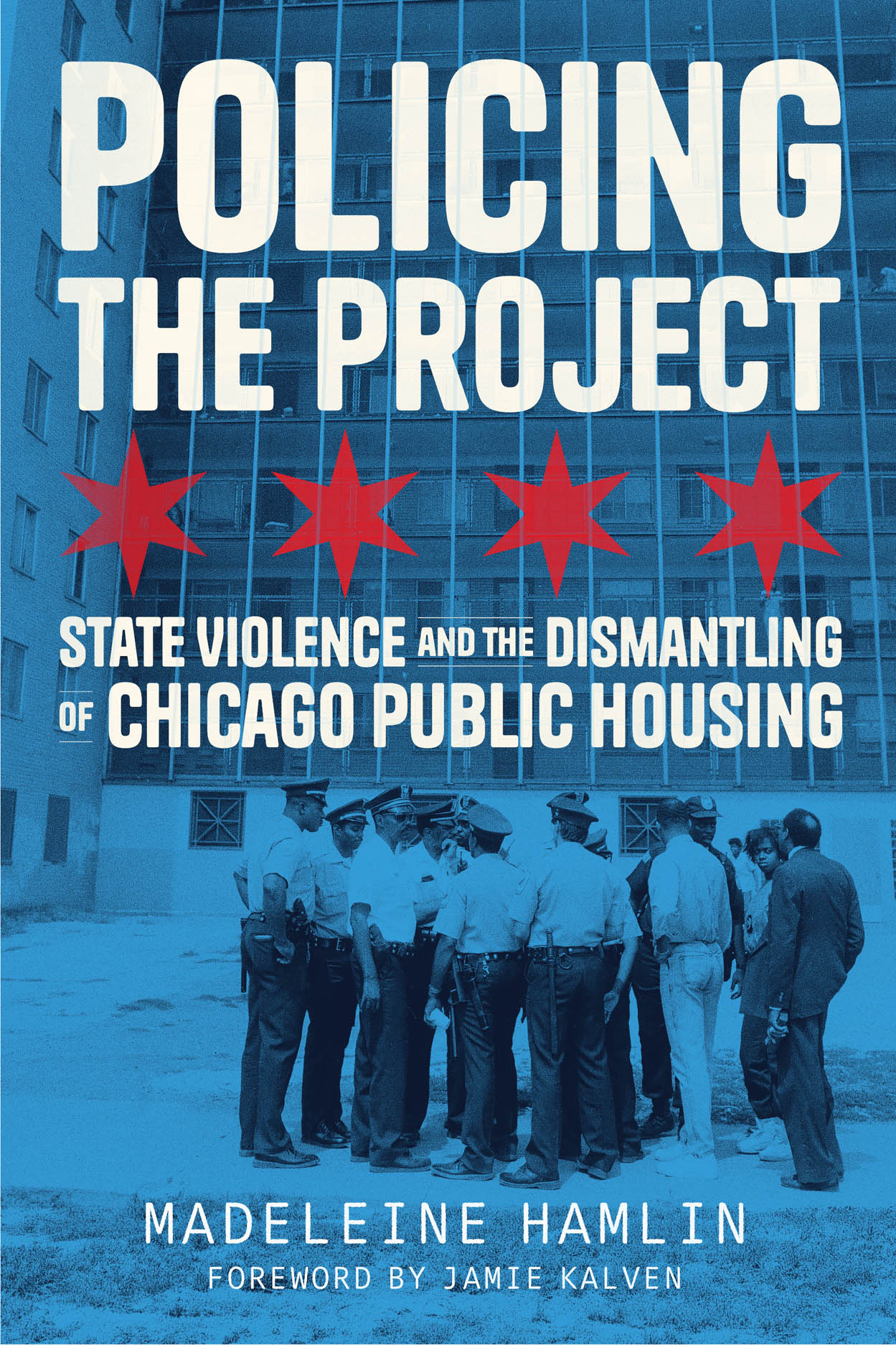
Policing the Project
State Violence and the Dismantling of Chicago Public Housing
Policing the Project
State Violence and the Dismantling of Chicago Public Housing
Shows how policing shaped the trajectory of public housing in Chicago and paved the way for its eradication and privatization.
Public housing should be a great public good, providing an essential basic need for people with lower incomes. Unfortunately, in the United States, policymakers turned their backs on public housing early on. Intended to be a utopia for the working poor, public housing in many cities became characterized by racial isolation, extreme poverty, and infrastructural breakdown, all of which left residents vulnerable to crime. State abandonment had one major exception, however: policing. In Policing the Project, geographer Madeleine Hamlin details how police played an important role in Chicago’s public housing from its origins in 1937 to the eve of its demolition at the turn of the millennium.
Based on archival data as well as extensive interviews with former residents and police officers, Hamlin describes the progressive institutional entanglement of public housing and policing as it unfurled over the course of the twentieth century. Policing the Project transcends mere description of how policing impacted everyday life for public housing residents, instead considering how policing shaped the institution of public housing as a whole. Hamlin argues that policing conditioned public housing’s downfall: draining housing budgets while exacerbating rather than mitigating crime and violence. Thus, policing played an important role in shaping the dramatic transformation of Chicago’s housing landscape, which entailed widespread privatization and the displacement of tens of thousands of Black Chicagoans.
256 pages | 12 halftones, 6 tables | 6 x 9 | © 2027
Geography: Cultural and Historical Geography, Urban Geography
History: Urban History
Sociology: Urban and Rural Sociology
Reviews

Table of Contents
List of Abbreviations
Foreword by Jamie Kalven
Introduction
1. The Police and the Policed
2. Policing Violence: Public Housing and Punishment
3. Policing the Poor: Raids in Public Housing
4. Policing the Panic: Gangs, Violence, and the State
5. Policing the Tragedy: A Son’s Murder, a Mother’s Eviction
Conclusion
Acknowledgments
Appendix A: Note on Research Methods
Appendix B: Timeline of Important Dates and Table of Key Policies and Programs, with Funding
Notes
Bibliography
Index