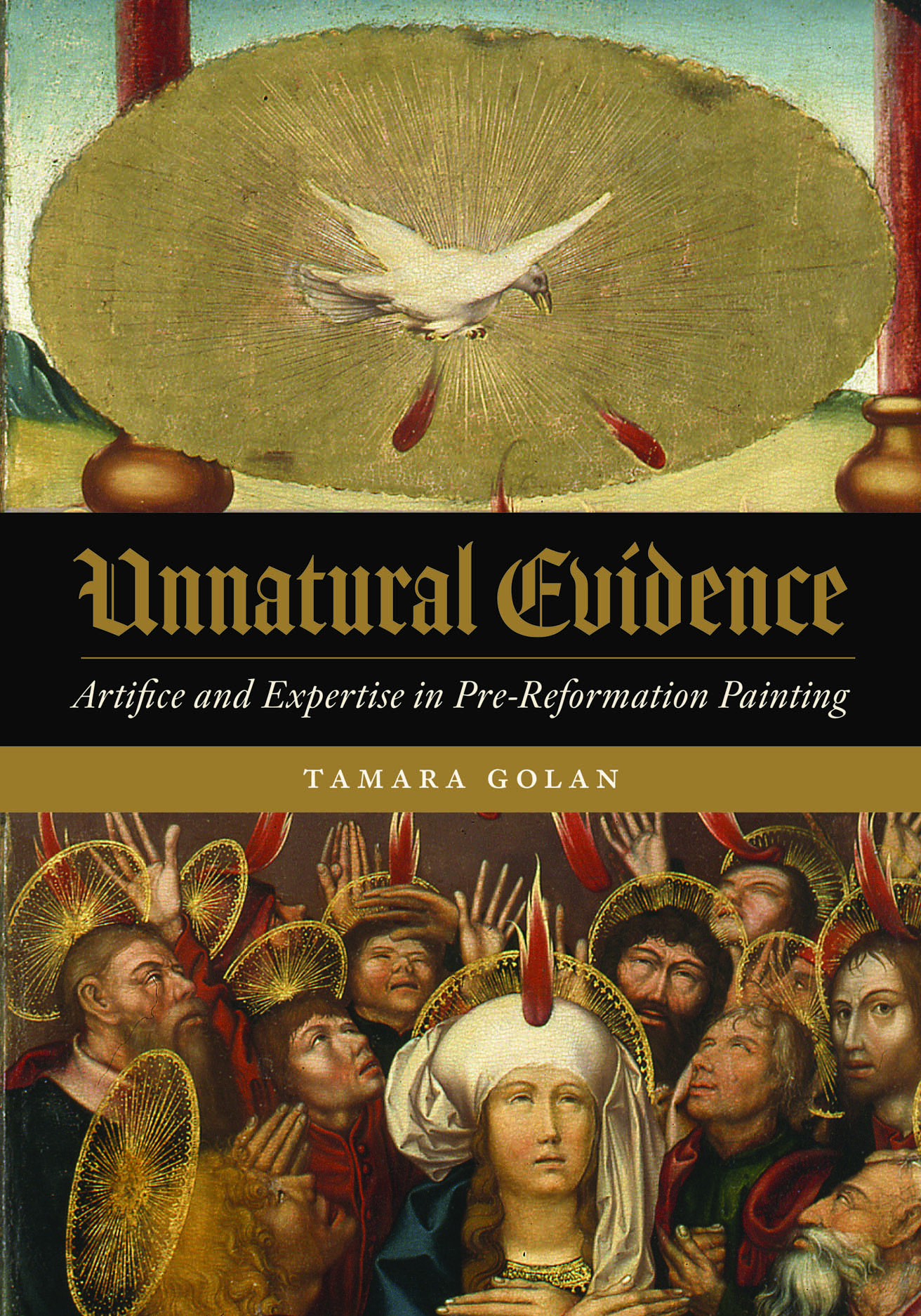
Unnatural Evidence
Artifice and Expertise in Pre-Reformation Painting
Unnatural Evidence
Artifice and Expertise in Pre-Reformation Painting
A novel account of the rise of pictorial naturalism on the eve of the Reformation.
In the summer of 1507, the town of Bern was abuzz with rumors about a sculpture at the Dominican church that had wept tears of blood. But astonishment soon gave way to doubt when a group of local artisans denounced the authenticity of the miracle, complaining that the tears were too poorly made to be the work of a skilled hand, let alone divine intervention. The resulting trial exposed an elaborate fraud staged by the church’s leaders and, with it, a tension that had been building across the region for nearly a century. In a world where claims of sanctity faced judicial scrutiny, the threshold between artistry and deception had become dangerously thin.
Tamara Golan examines how three generations of painters working in fifteenth- and sixteenth-century Switzerland navigated this fraught terrain. Golan traces how, amid intensifying skepticism over the authenticity of miracles and visions, these artists forged what she calls an “alternative naturalism,” a conspicuously unnatural mode of painting marked by distorted perspective, unusual modeling, and heavily tooled gold ground. Rather than striving for the faithful transcription of appearances, these artists drew on shared premises of artisanal expertise and juridical inquiry to advance bold claims about the capacity of their craft to represent not just the natural but the supernatural. The first study to identify this body of work as a coherent enterprise, Unnatural Evidence recovers an epistemological experiment at once ambitious and inherently unstable.
312 pages | 40 color plates, 90 halftones, 2 line drawings | 7 x 10 | © 2026
Art: Art--General Studies, European Art
History: European History
Religion: Christianity
Reviews

Table of Contents
Part I: Alternative Foundations
Introduction: Toward a History of Swiss Naturalism
1. The Artist’s Discernment
Part II: The Jetzer Affair and Its Aftermath
2. Matters of Expertise
3. Matters of Deception
Part III: The Expertise of Hans Fries
4. Judicial Perspectives
5. Supernatural Mimesis
Part IV: The Artifice of Niklaus Manuel
6. The Painter as Inquisitor
7. Niklaus Knows Everything
Part V: Certain Reckonings
Conclusion: The Failures of Swiss Naturalism
Acknowledgments
Abbreviations of Frequently Cited Sources
Notes
Index