Distributed for Tupelo Press

Forever Mistaken for Ourselves

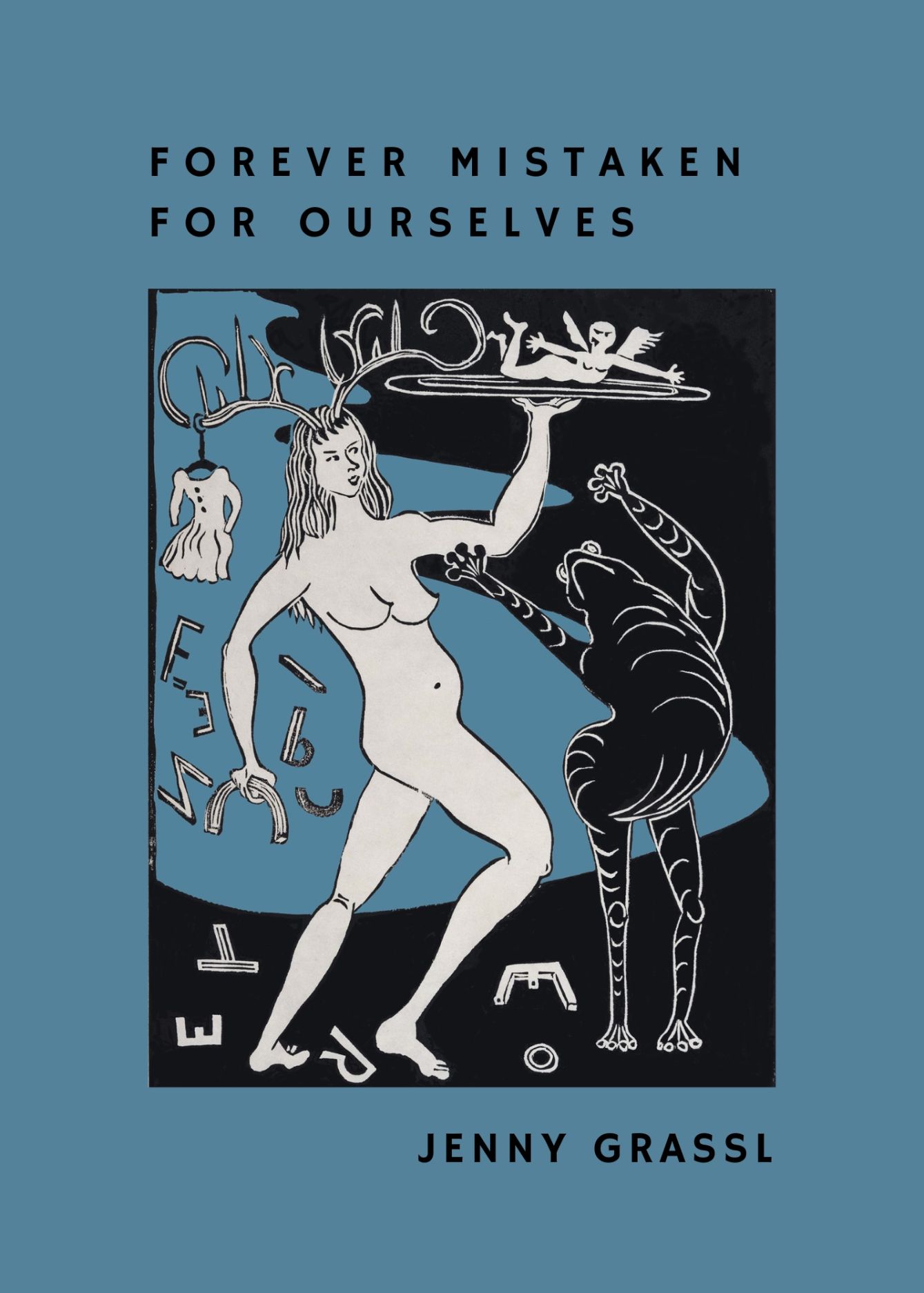
A collection of poems envisioned as a magic wardrobe of mirrors, vast with ocean and meadow, revealing reflections of the muses, a deer woman, and a sea-monster lover.

Forever Mistaken for Ourselves tells a story of transformations. Iron dresses, veils nailed to an hourglass, and a sex-changing flower/human defy or define a woman and her place in daily life and history. Queen Anne’s black lace leaves holes open for a ghost. Never just coy, these characters and artifacts get up and do battle with complacency, in an all too often misogynistic world. Beasts come and go through the mirrors, a fish-man breaking through to deliver a whole-body kiss to a woman. Forests rise, and lawns “lean lethargies” to hold the reflected images of the speakers. Is there a confirmation of existence? “If she is—a silver say-so.”


80 pages | 6 x 9 | © 2026

Poetry


Tupelo Press image

View all books from Tupelo Press

Reviews

“In Forever Mistaken For Ourselves, the line we draw between our human bodies and those of animals, or even plants, is blurred to the point of almost full metamorphosis. It is amazing to read Grassl’s language, a shimmering membrane which moves between describing and revealing this phenomenological experience. It is like aging – being in a body but watching as it becomes so other to myself, and in this mirror, I am unrecognizable. And, so I do become more comfortable with my limbs of deer antler, my skin of bee, and my mind of crawling meadows. That Grassl captures the delicate, changing form of the human even as we evolve beyond ourselves is nothing short of remarkable.”

Kristin Prevallet, author of A Varied and Tender Multiplicity

Forever Mistaken For Ourselves, with its mirrors, shifting identities and transformations, feels not so much composed as received from a magical realm. Here, misogyny, the disappearing ecology and the limitations of language itself are met with lush, rebellious imagery. From Nomenclature: so you fill The Forgettery/ that soiled-linen-gray mausoleum cabinet/in the side of the mountain/with labeled shelves for lost words/and doors. In Flower of Empire: The Two-night Life and Sex Change of Victoria Amazonica, a protogynous lily named for Queen Victoria possesses both female and male reproductive organs in turn: I astonish in a white dress/my never whole/spectacle woman tough-gloried/out of the shell of spines/a body/in hundreds of pieces/petals arranged/by a god who was sorry.Without traditional lineation, these poems are cast across the entire page. White spaces between words and stanzas create breath, pulse and rhythm with all the leaps and surprises of a jazz score. One of the most original poets writing today, Jenny Grassl has created an astonishing work of lyric architecture.”

Julia Thacker, author of To Wildness

“With a flicker of Brock-Broido and a fringe of Dickinson, Grassl swims us through an ornate up-river so that we react perhaps with heart, instead of head, with gut and also god.”

Jennifer Militello, author of Identifying the Pathogen

“A syllabic ecstasy mirroring that of the night sky and starlight. Echoic in their magic, these poems answer fact with fable and ephemera with deeply rooted imagery and home truths.”

Donald Revell, author of Canandaigua

“This is pastoral dipped in fire and swelling with song, an immersive experience unlike in any poetry currently popular. This is Grassl’s world, unmistakable and riveting.”

Joan Houlihan, author of It Isn't a Ghost If It Lives in Your Chest

"Deploying associative images and white space on the page, each line is spell casting—"

Robert Carr, author of Blue Memento

Be the first to know

Get the latest updates on new releases, special offers, and media highlights when you subscribe to our email lists!

Sign up here for updates about the Press