Distributed for University of Wales Press

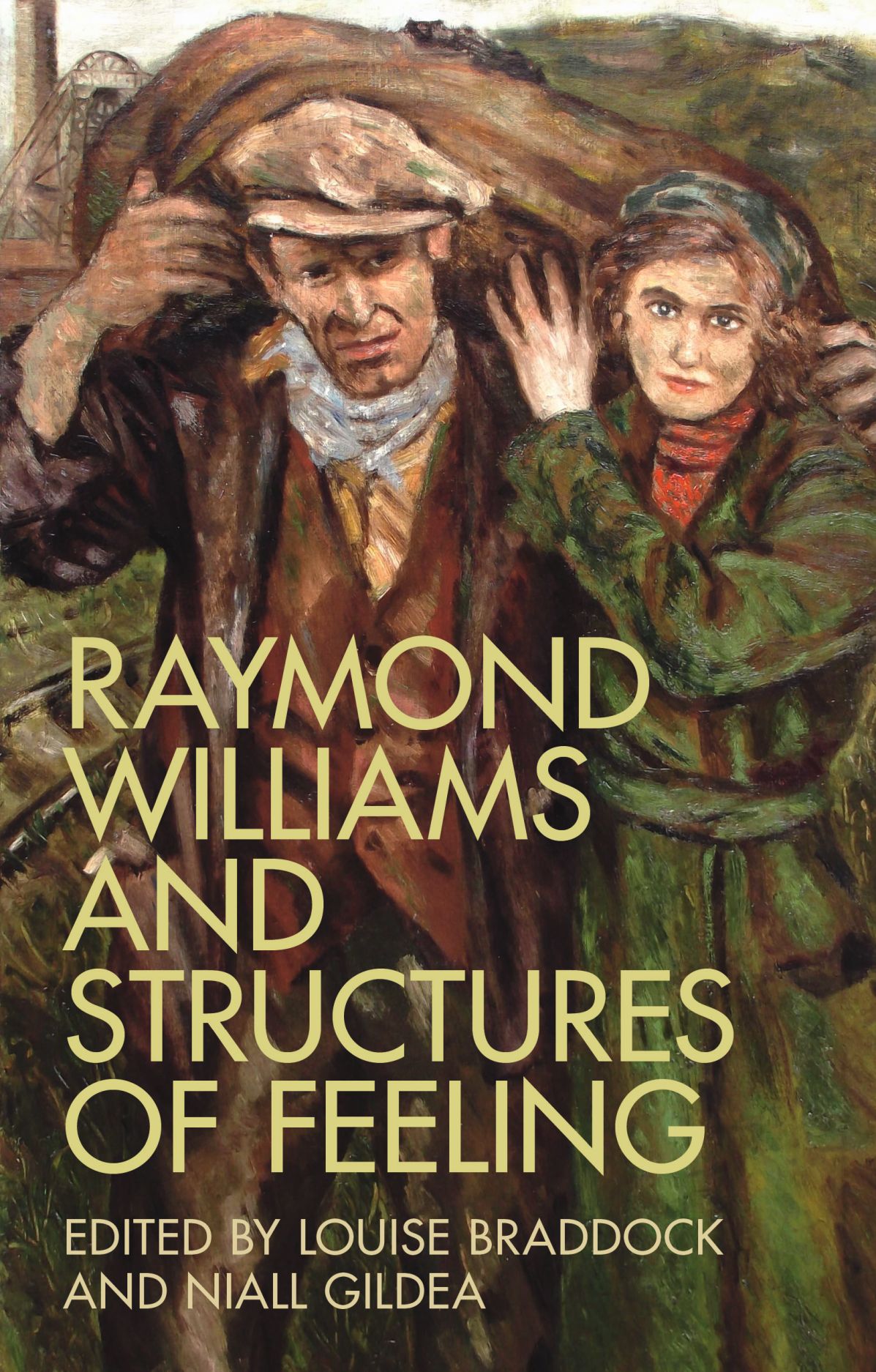
Raymond Williams and Structures of Feeling

Examines the lasting impact of Welsh writer Raymond Williams’ concept of “structures of feeling."

Raymond Williams is one of the most important anglophone cultural critics of the twentieth century. In a distinguished career, his readings of the British literary canon offered radical new ways of looking at British society as it developed from the Romantic period into the modern age. Central to this reevaluation was the idea of “structures of feeling,” which Williams shaped in order to explain the ways in which members of societies felt about one another and how they changed over time. Raymond Williams and Structures of Feeling examines the value and impact of his work on ongoing contemporary debates in areas such as anthropology, economics, law, literary studies, philosophy, psychology, and social geography.


376 pages | 5.43 x 8.5 | © 2026

Biography and Letters

Literature and Literary Criticism: General Criticism and Critical Theory


University of Wales Press image

View all books from University of Wales Press

Reviews

“What ‘structures of feeling’ surround Raymond Williams’s own work today, more than seventy years after the inception of his most famous concept? In this remarkable collection of essays, Louise Braddock and Niall Gildea gather together scholars and writers from a broad range of disciplines to consider the past, present and future of Williams’s work. From the death of George Floyd in the USA to student protests in South Africa, this book testifies to the enduring power of Williams’s ideas to illuminate a new epoch of dark times. It will be essential reading for anyone interested in contemporary cultural and literary criticism.”

Arthur Bradley, Lancaster University

“Late in his long career, Raymond Williams came to a reckoning with what he called a disabling ‘element of passivity’ in the kind of reading he had learned to practice from his teacher, I. A. Richards. He had grown wary of immersive critical engagements that hewed too closely to mere exegesis of the text in question. The essays in this bracing new collection approach Williams’s most important critical concept as though responding to the call implicit in own late caveat against immersive reading. Actively and aggressively, they both analyze the notion of the ‘structure of feeling’, sometimes skeptically, and apply it to problems unanticipated by Williams, across a wide range of disciplinary contexts beyond criticism itself – from history, philosophy and gender studies to psychoanalysis, anthropology and criminology.”

James Chandler, University of Chicago

“At the end of his Saffron Walden exile, Raymond Williams was still writing feverishly about his beloved homeland in the Black Mountains border country. Hardly surprising, then, that ‘structures of feeling’ became his deeply personal signature concept. There was a demand for it on the humanities Left, where it became foundational to cultural studies and influential in many other fields. Unlike Thompson’s ‘moral economy’ or Gramsci’s ‘cultural hegemony’. . . for plodding rationalists ‘structures of feeling’ was always an incoherent oxymoron. But, as this volume splendidly demonstrates, therein lies its enduring appeal.”

Chris Hann, emeritus director, Max Planck Institute for Social Anthropology

“Raymond Williams’s ‘structures of feeling’ has been more often invoked than defined. This collection responds to that difficulty head on, testing the critical concept across a range of theoretical contexts. Rather than tidying the term, the essays treat it as a way of thinking about experience in motion, and the concept emerges not as a handy tool but as a means of noticing how social life feels while it is still taking shape, and how those inchoate pressures later harden into forms we mistake for inevitabilities. It is a lucid and deeply compelling account of one of the defining concepts of our time.”

Sowon S. Park, University of California, Santa Barbara

“This book’s excellent cornucopia of papers highlights the bearing of ‘structures of feeling’ on social change, psychoanalysis, anthropology, affect theory, criminalization, political protest in South Africa, social policy in Britain, visual art and poetry.”

Janet Sayers, University of Kent

Table of Contents

1. Louise Braddock and Niall Gildea, ‘Introduction’ 

SECTION 1: Structures of Feeling in Context   

Christopher Newfield, ‘Raymond Williams’s Subtheory of Cultural Revolution’

Michael Rustin, ‘Structures of Feeling and Psychoanalysis’ 

Keir Martin, ‘Structures of Feeling and Patterns of Culture: Raymond Williams, Anthropology and Psychoanalysis’ 

Katie Fleming, ‘Structures of Feeling and Affect Theory’   

SECTION 2: Structures of Feeling in Practice   

Henrique Carvalho, ‘Patterns of Blaming and Structures of Feeling: Thinking Culturally about Criminalization’ 

John Higgins, ‘Talking about My Generation: Student Protests and Structures of Feeling in South Africa’ 

Eleanor Jupp, ‘Structures of Feeling and Affective Geographies of the UK Welfare State’ 

Louise Gyler, ‘The Making of Witches and Monsters: Woman in the Australian Cultural Landscape’   

SECTION 3: Structures of Feeling and Cultural Expression   

Louise Braddock, ‘Structures of Feeling: A Philosophical Interpretation’ 

Ellie Roberts, ‘The Individual in Culture: The Creative Work of the Artist and the Psychoanalyst’ 

Alex Wylie, ‘Saying the Unsayable: Structures of Feeling and Contemporary Poetry’   

Terry Eagleton, ‘Afterword: Are Structures of Feeling an Illusion?’

Be the first to know

Get the latest updates on new releases, special offers, and media highlights when you subscribe to our email lists!

Sign up here for updates about the Press