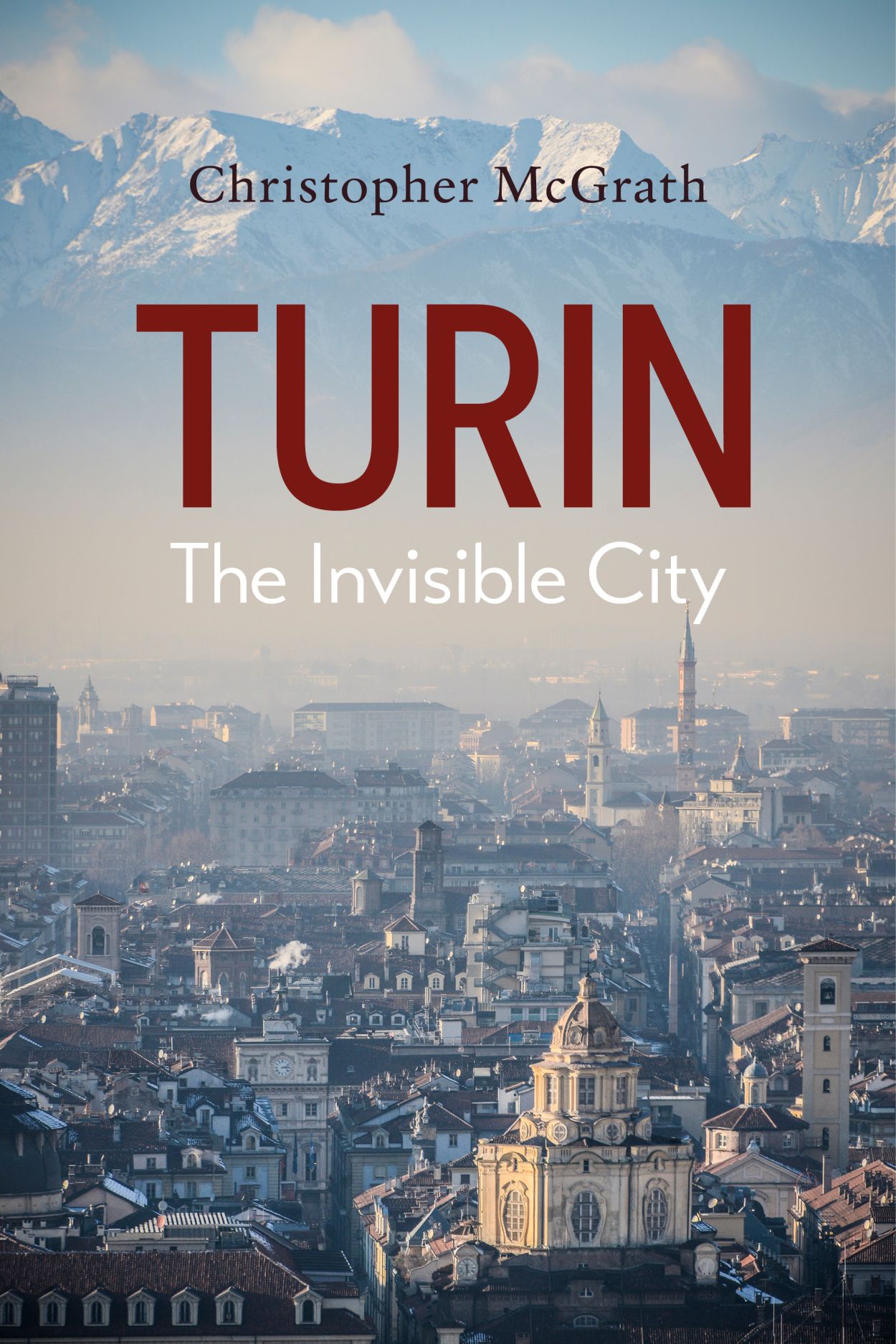
A history of Turin, home to Fiat, the Einaudi publishing house, and writers including Italo Calvino, Primo Levi, Cesare Pavese, and Natalia Ginzburg.
Unknown to most foreigners, as they follow each other around Florence and Siena, Rome and Venice, the Italy they see today is the result of a second renaissance. And its seat was a city they needed to discover, in all its enigmatic allure, if they were truly to understand the nation it brought into being. As Umberto Eco says, “Without Italy, Turin would have been more or less the same. But without Turin, Italy would have been very different.” This baroque jewel at the foot of the Alps provides a unique prism on the story of modern Italy: not just as a founding capital, but also in kindling a political, cultural, and economic regeneration after the tragedies of dictatorship and civil war.
Their emergence as a dynamo of national industrialization, symbolized by Fiat, had made the factories of Turin the original seat of both Italian capitalism and socialism, and, accordingly, the heart of resistance to Mussolini. After the Second World War, the city experienced parallel revivals. On the one hand, Fiat proved a foundation stone for Italy’s famous “economic miracle"; on the other, the Einaudi publishing house became a platform for the greatest local flowering of Italian culture since the days of the Medicis, not least through several of its own employees, including Natalia Ginzburg, Cesare Pavese, and Italo Calvino. These competing energies were personified by the respective enigmas who presided over these agencies of renewal, Gianni Agnelli and Giulio Einaudi.
But their rivalry also only demonstrated the polarities that have long defined this royal city of arcaded streets and squares, with its wild mountain backdrop. That contrast is expressed even by the city’s rival football teams: the seigneurial Juventus, long bankrolled by the Agnelli family, its perennial success toasted throughout the peninsula; and Torino, the fallen giants whose tragic legacy commands the underdog fidelity of local nostalgics, workers, and rebels.
Exploring the contribution of Turin to modern Italy, Chris McGrath entwines some of the nation’s most celebrated names with less familiar citizens who illuminate the gaps: from the forgotten poet who bears exquisite witness to the city’s crepuscular atmosphere at the turn of the last century, to the Torino footballer who fought with the partisans before becoming a star of neorealist cinema.
Risorgimento, resistance, reconstruction: none of these decisive phases in Italy’s modern evolution would have been the same without this unsung city.

Reviews

Table of Contents
Preface 1
1. The City and the Hill 13
2. A Tale of Two Capitals 43
3. Turin by Twilight 67
4. Fiat Tenebra 105
5. Bands of Brothers 135
6. Gente Così per Bene! 163
7. To the Hills 193
8. The Reckoning 219
9. Phoenixes and Ostriches 245
10. Best of Enemies 275
11. A Butterfly in Corso Re Umberto 305
Some Further Reading 343
Acknowledgements 355