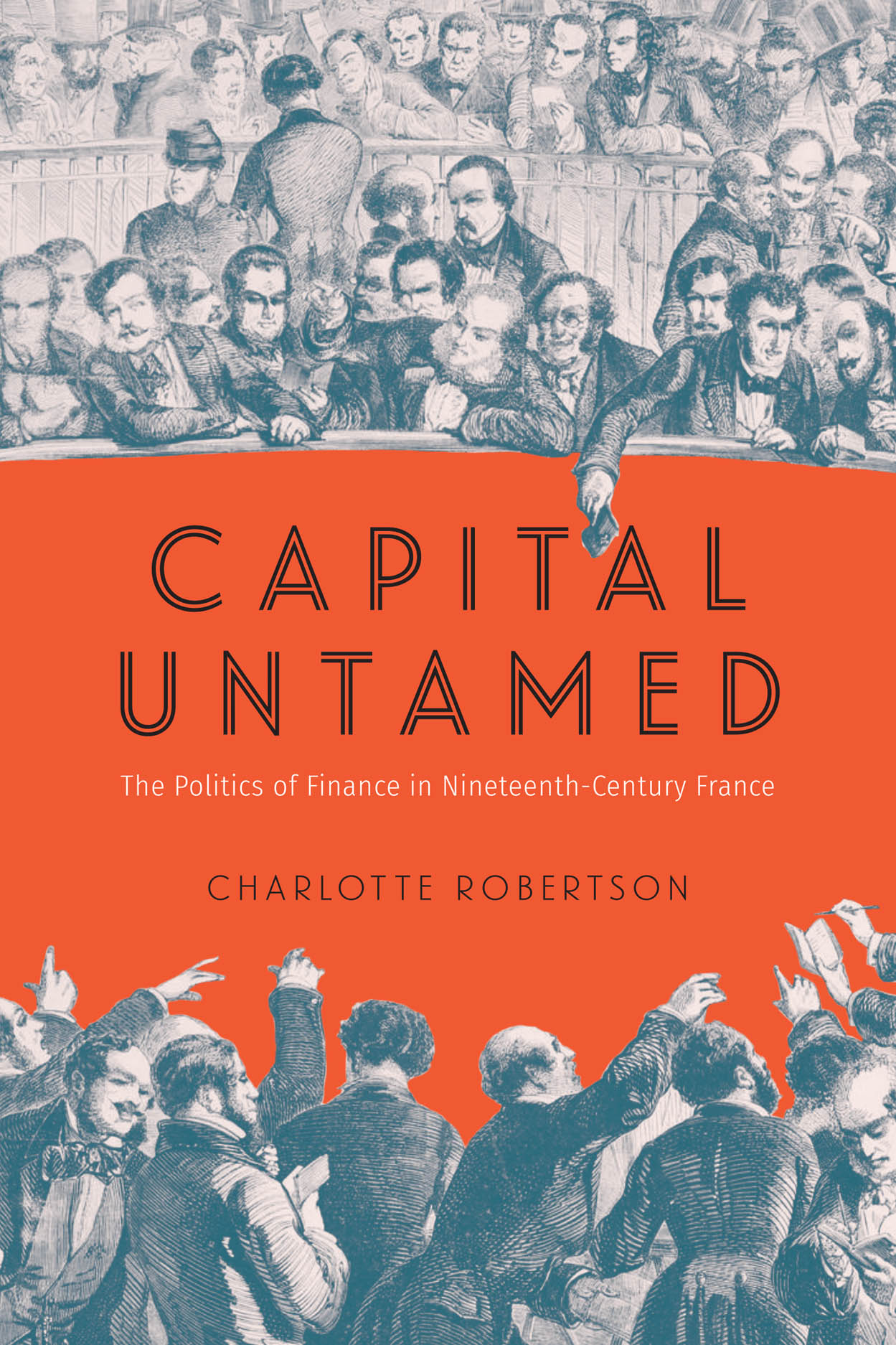
Capital Untamed
The Politics of Finance in Nineteenth-Century France
Capital Untamed
The Politics of Finance in Nineteenth-Century France
The story of a bold political experiment in nineteenth-century France to establish power through finance.
Amid the rise of industrial capitalism and revolutionary upheaval, French reformers asserted that finance should be reimagined as an instrument of economic and social transformation rather than left to the logic of private profit and speculation. In the 1850s, under Napoleon III’s authoritarian regime, this vision took institutional form as the Bonapartist state strategically deployed finance, broadened market participation, and sponsored new banks with the promise of directing investment toward infrastructure and industry. Yet this effort to harness and mobilize capital ran into a problem: The financial markets refused to be tamed.
Drawing on rich archival sources—from police surveillance and courtroom transcripts to investment manuals and petitions for incorporation—Capital Untamed reveals how the financial markets became an instrument of political power, frustrated state ambitions, and ultimately escaped attempts at mastery. In this striking debut, historian Charlotte Robertson shows how the French state and its citizens navigated a turbulent era of European capitalism animated by debates over the social purpose of financial capital. Ultimately, politicians’ efforts to establish legitimacy by reorganizing finance—and their confrontations with the limits of that project—set the stage for a form of modern discontent with the financial system that survives to this day.
320 pages | 12 halftones | 6 x 9 | © 2026
History: European History, General History, History of Ideas
Reviews

Table of Contents
Part I. Instrumentalizing Finance, 1815–51
Preface to Part I. The Economy as It Was Experienced
Chapter 1. A Realizable Utopia: The Saint-Simonian Program to Reengineer Society Through Finance
Chapter 2. Financial Solutions to Social Questions: Projects for the Democratization of Capital
Part II. Confronting Autonomy, 1852–67
Preface to Part II. Authoritarianism and the Bourse
Chapter 3. Policing Finance: Capital Regulation, Public Surveillance, and Market Knowledge
Chapter 4. Harnessing Investment: The Bonapartist Experiment in Capital Governance
Chapter 5. Dualities of Capital: The Official Parquet and the Illicit Coulisse
Chapter 6. Aspiration and Asymmetry: Retail Investor Education and the Limits of Market Legibility
Conclusion. Promise and Peril
Acknowledgments
Notes
Selected Bibliography
Index