Distributed for Intellect Ltd

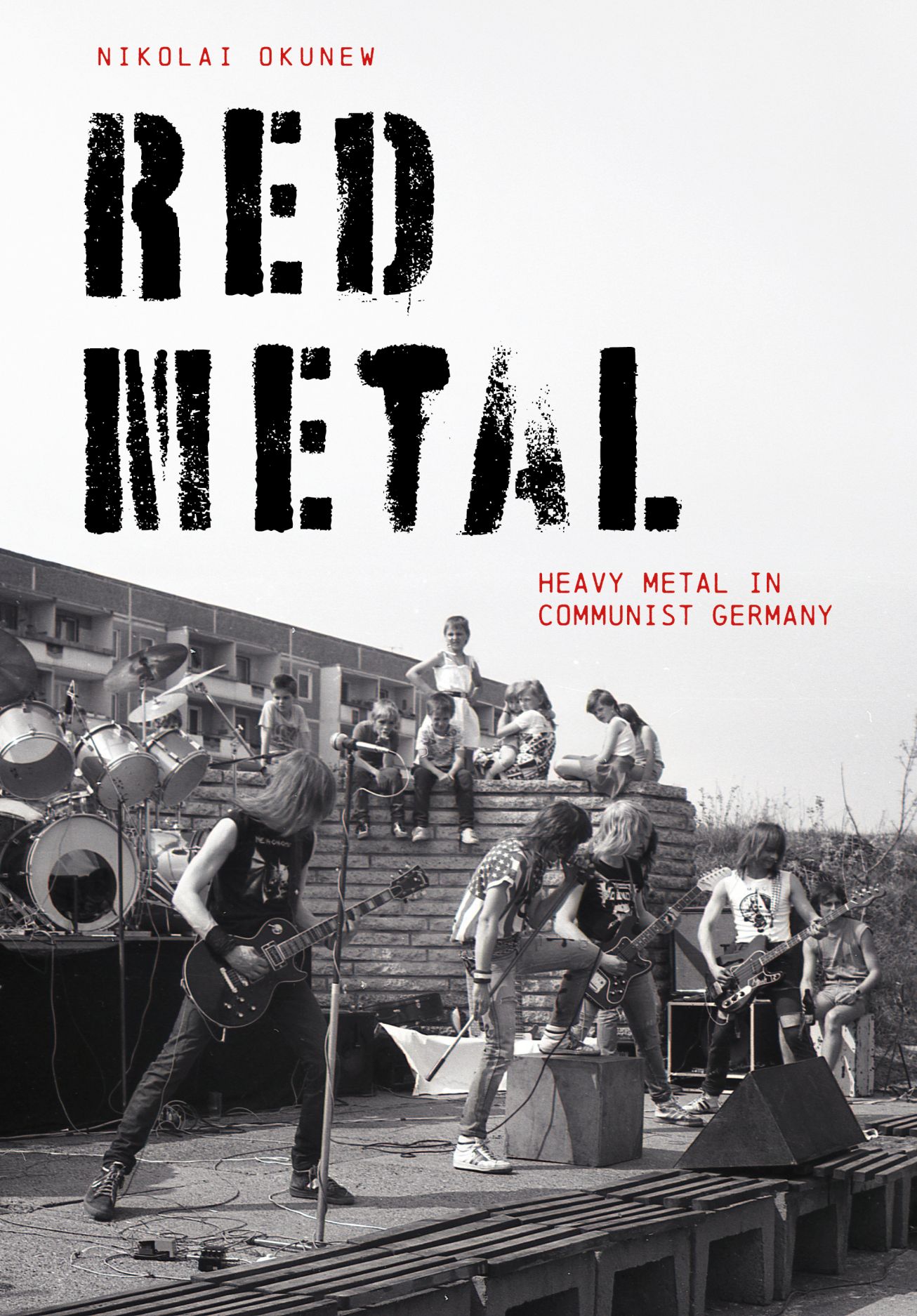
Red Metal

Heavy Metal in Communist Germany

Red Metal offers the first major English-language history of the heavy metal subculture in the German Democratic Republic. 

Far from existing at the margins of political life, heavy metal became a revealing site of cultural tension within the German Democratic Republic (GDR). Although many fans and musicians understood themselves as apolitical and devoted primarily to music, their appearance, practices, and transnational cultural affiliations frequently attracted suspicion from state institutions and official media. As a result, heavy metal fans and musicians occupied an uneasy position within socialist society: conforming to workplace expectations while simultaneously being marked as socially deviant, ideologically suspect, or culturally threatening.

Tracing the development of bands, fan communities, concert networks, media coverage, and state surveillance, Red Metal examines how global musical culture circulated and acquired new meanings behind the Iron Curtain. The book explores the ways East German metal fans adapted Western subcultural forms to local political and economic conditions, creating distinctive modes of identity, belonging, and symbolic escape within the constraints of late socialism.

At the same time, the study offers broader insights into the contradictions of socialist modernity, revealing how youth culture exposed tensions between ideological control, cultural openness, transnational influence, and everyday negotiation. In doing so, Red Metal moves beyond conventional Cold War narratives to show how subcultural life in the GDR was shaped not simply by repression, but by complex forms of accommodation, aspiration, adaptation, and resistance.

Combining rigorous scholarship with accessible and engaging prose, Red Metal makes a major contribution to metal studies, popular music studies, Cold War history, German studies, and the cultural history of socialism. Translated from German original, the book will appeal not only to scholars and students, but also to readers interested in heavy metal culture, youth subcultures, East German history, and the global circulation of popular music. 


248 pages | 6.69 x 9.61 | © 2027

Advances in Metal Music and Culture

Music: Ethnomusicology, General Music


Intellect Ltd image

View all books from Intellect Ltd

Table of Contents

1 Introduction Heavy metal on Prager Strasse Heavy metal as an object of study 2 Heavy Metal as a Form of Aesthetic Disobedience Western role models Long hair as a self-imposed stigma The battle jacket as a sign of individuality, time investment, and knowledge Leather, denim, and metal as an expression of toughness Friends and finances: The procurement, production, and distribution of the heavy metal outfit Budapest as a place of longing Play and provocation: The function and perception of clothing in the GDR Pluralization and radicalization Age, work, and gender 3 The Day-to-Day Practices of Heavy Metal Bands in the GDR (White) blues and heavy metal bands in the GDR An authentic copy: Covering heavy metal songs and the question of authenticity The Party’s attempts to control heavy metal and crises under really existing socialism: Heavy metal bands in the state evaluation system Be happy and sing? Heavy metal music as a deviation from the emotional regime of the GDR “For me, the music was always more important than the lyrics”: The language and content of song lyrics of East German heavy metal bands Shortages and gigs Formel 1 and the limits of possibility in the GDR Stasi methods and Macbeth Blackout, Disaster Area, and the long road to the West 4 Red Metal Media? Heavy Metal and East German Radio Imported music: Metal radio in the GDR Taking root: The heavy metal hour on Stimme der DDR Heavy metal finds a home on Jugendradio DT64 Heavy metal conquers the charts on Beatkiste The contested early days of Tendenz Hard bis Heavy Using networks to find the latest music for Tendenz Hard bis Heavy Home dubbing Belated metal productions with East German radio DT64 as a recording service and concert calendar Service over ideology 5 Heavy Metal Concerts as a Form of Transgression Highbrow vs. lowbrow: Concerts in the ruling discourse Media and word of mouth: The challenge of figuring out concert dates Hard-won success: Traveling to heavy metal concerts Erosion and commercialization: Official concert venues Bad reputations and paying guests: Private heavy metal concerts Foreign bodies: Dance practices at heavy metal concerts in the GDR Masculinized bodies? Women at East German heavy metal concerts Temporary flight 6 The Political Dimension of Heavy Metal in the GDR Friend and foe: The relationship between heavies and skinheads Right-wing violence and heavy metal “Barroom brawls”? Everyday violence and heavy metal concerts  Satan goes to church? Heavy metal and churches in the GDR Dropping out through conformity, work, and the army “Politics sucks”: Heavies on the political sidelines 7 Summary and Perspectives March 1990 The end of the networks The breakup of bands The end of live concerts Conclusion: A subculture of East Germany Bibliography Archival Sources Published Sources

Be the first to know

Get the latest updates on new releases, special offers, and media highlights when you subscribe to our email lists!

Sign up here for updates about the Press